
Throughout this project, my research has focused on determining whether PepsiCo’s SmartSnack Studio™ MixBox could meet the needs of consumers who want more control over their snack choices. The research conducted so far supports PepsiCo’s objective of responding to changing consumer preferences through innovation and convenient food options. My primary survey provided some encouraging preliminary results. All three respondents, or 100%, selected both healthier snack options and the ability to customize their snack selections as features that would influence their decision to purchase the MixBox.
In addition, 33.33% said they would definitely consider purchasing the product, while 66.67% responded “maybe yes.” These findings suggest interest in the concept, particularly due to its healthier and customizable features. However, the results also show that interest does not automatically mean consumers are ready to purchase. All three respondents described MixBox as a good idea but indicated that they would like to learn more before making a purchase.
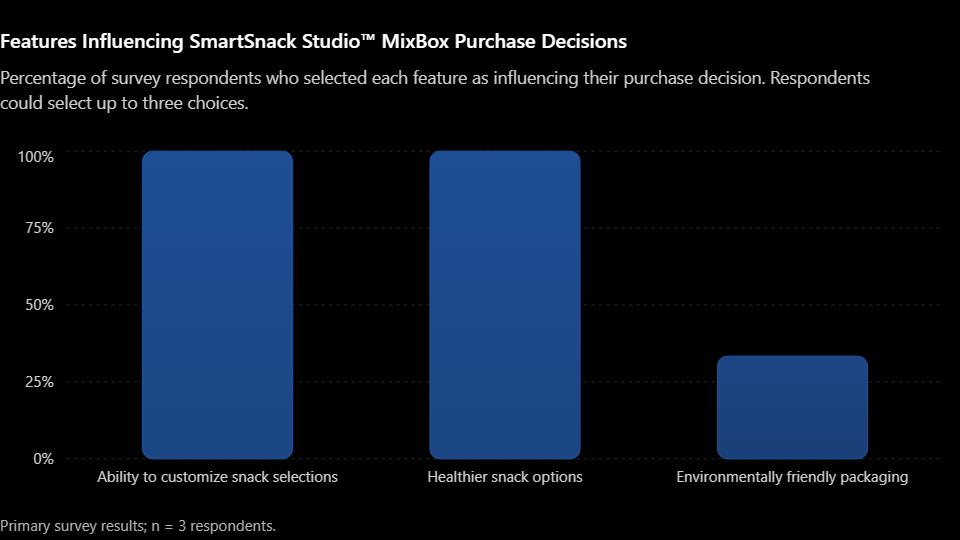
Figure 1. Features that most influenced respondents’ interest in purchasing SmartSnack Studio™ MixBox. Primary survey data, n = 3.
Several future and current trends could influence the success of SmartSnack Studio™ MixBox, including healthier eating, personalization, convenience, digital engagement, and consumers’ expectations for flexible purchasing options. My survey results support some of these trends, but they also helped me reconsider parts of my original strategy. For example, 66.67% of respondents preferred purchasing the MixBox at a grocery store, compared to the 33.33% who preferred a subscription service. This suggests that PepsiCo should not rely entirely on direct-to-consumer sales. A multichannel strategy that combines retail availability with online customization and subscription options may be more appropriate. There are also risks to consider. SmartSnack Studio™ MixBox could potentially take sales away from existing PepsiCo snack products rather than generate entirely new sales. Customization could also make inventory management, packaging, and fulfillment more complicated than selling traditional prepackaged snack assortments.
Figure 1. Features that most influenced respondents’ interest in purchasing SmartSnack Studio™ MixBox. Primary survey data, n = 3.
he marketing strategy must also follow industry, legal, and ethical standards. PepsiCo should make accurate claims about its products and avoid presenting healthier snack choices in ways that could mislead consumers about their nutritional benefits. This is especially important because the Federal Trade Commission states that advertising claims must be truthful, nondeceptive, and supported by evidence (Federal Trade Commission [FTC], n.d.). My promotional strategy also includes social media and influencer marketing. If PepsiCo compensates influencers or gives them free products, their relationship with the company should be clearly disclosed. FTC guidance states that material relationships between influencers and brands must be disclosed so consumers can properly evaluate an endorsement (FTC, n.d.). Following these standards would permit PepsiCo to use digital promotion while protecting consumer trust.
The sample size is one of the most significant limitations of my research. Only three people completed my survey, which means the percentages provide preliminary insight but should not be generalized to the entire U.S. target market. The sampling chapter explains that researchers must consider the desired level of population variability, confidence, precision, and number of completed surveys when determining an appropriate sample size (Hair et al., 2024). Another limitation is that respondents evaluated a product concept rather than an actual prototype, so they could not evaluate factors such as packaging, portion size, product quality, or the overall customization experience. Pricing also requires additional research. Although respondents strongly valued healthier choices and customization, 66.67% indicated that a lower price would make them more likely to purchase the product. This suggests that PepsiCo should do more pricing research before determining the final price.
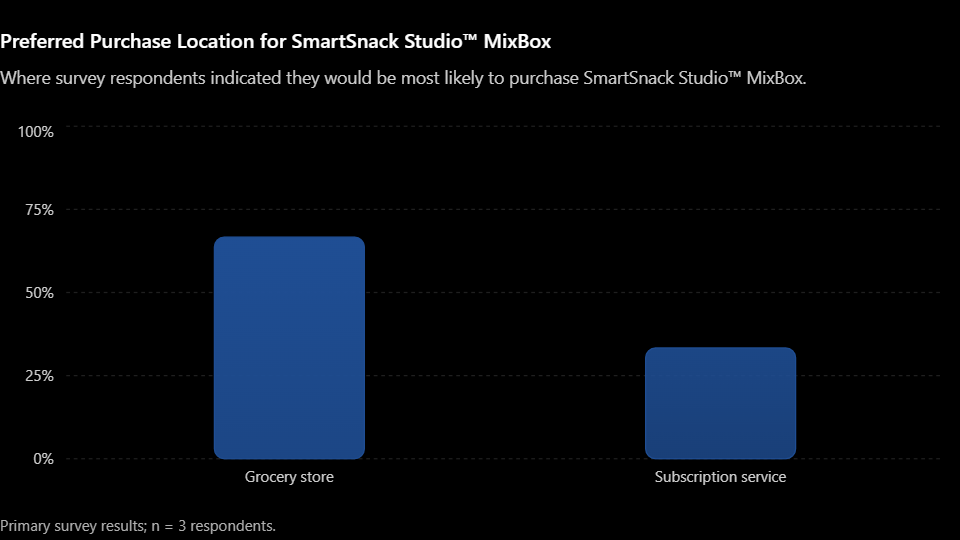
Figure 2. Preferred purchase location for SmartSnack Studio™ MixBox. Primary survey data, n = 3.
Overall, my preliminary findings suggest that SmartSnack Studio™ MixBox has potential, but more research is needed before recommending a national launch. A larger and more representative survey, product testing, additional pricing research, and possibly a limited test-market launch would help determine whether the positive interest found in this small study translates into actual purchasing behavior. The research has shown me that a promising product concept is only the beginning; PepsiCo must also understand what consumers value, what may prevent them from purchasing, and how the product can be introduced in a way that supports both consumer expectations and the company’s objectives.
References
Federal Trade Commission. (n.d.). Advertising and marketing
Federal Trade Commission advertising and marketing guidance
Federal Trade Commission. (n.d.). Disclosures 101 for social media influencers.
FTC Disclosures 101 for Social Media Influencers
Hair, J. F., Ortinau, D. J., & Harrison, D. E. (2024). Essentials of marketing research. McGraw Hill.
 Market Insight
Leave a comment